
The first thing you feel is the kick.
A single point of pressure in the chest, blooming outward.
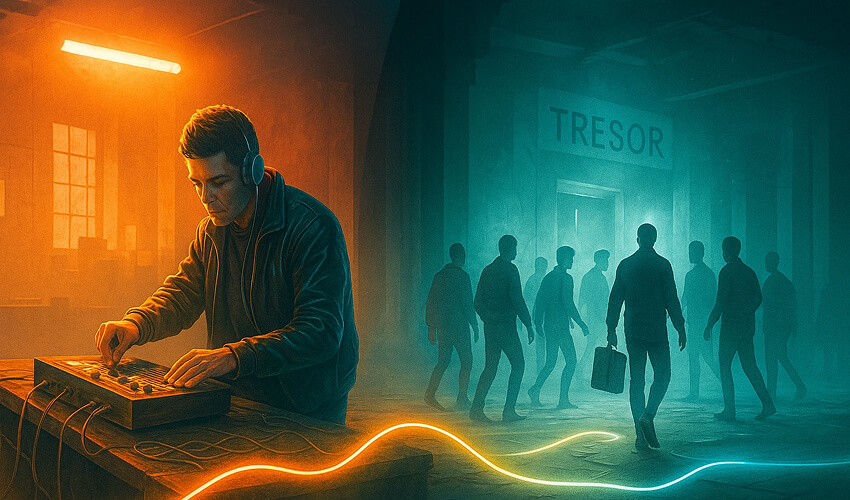
Detroit, late 1980s.
Outside, the auto factories have gone quiet; the assembly lines that once defined the city now sit like fossilised skeletons of a vanished certainty. But inside an abandoned warehouse, fog, heat, and a single strip of flickering neon illuminate a makeshift DJ booth. Wires like veins. LEDs like frantic synapses. A teenager in a leather jacket coaxes patterns from a second-hand drum machine.
Boom. Boom. Boom. Boom.
The sound feels less like music and more like a heartbeat for a city fighting to stay alive.
Cut to Berlin, early 1990s.
The Wall is gone, reduced to rubble and souvenir chips. In the basement vault of the ruined Wertheim department store, dust hangs in flashlight beams. The faint word TRESOR “vault” peels from concrete. Youth from East and West descend into the darkness, carrying vinyl in battered suitcases. Detroit beats bounce off the iron bars of the old bank vault. Shadows blur. Bodies merge.
A decade earlier, these dancers would’ve been divided by ideology, concrete, and barbed wire.
Tonight, they move as one rhythmic organism.
The Boom. Boom. Boom. Boom. bridges a world that politics tore apart.
Why Techno Matters
Techno isn’t a “genre.” It’s a ritual interface, a way for humans and machines to sync their signals.
It began as a response to collapse in Detroit, became a salve for reunification in Berlin, and now, in an age of neural networks and algorithmic creation, techno confronts its deepest question yet:
What happens when the machines we used to play begin to play back?
To understand that future, we journey backwards—Detroit → Berlin → the Neural Horizon.
The City That Turned Its Factories Into Drum Machines
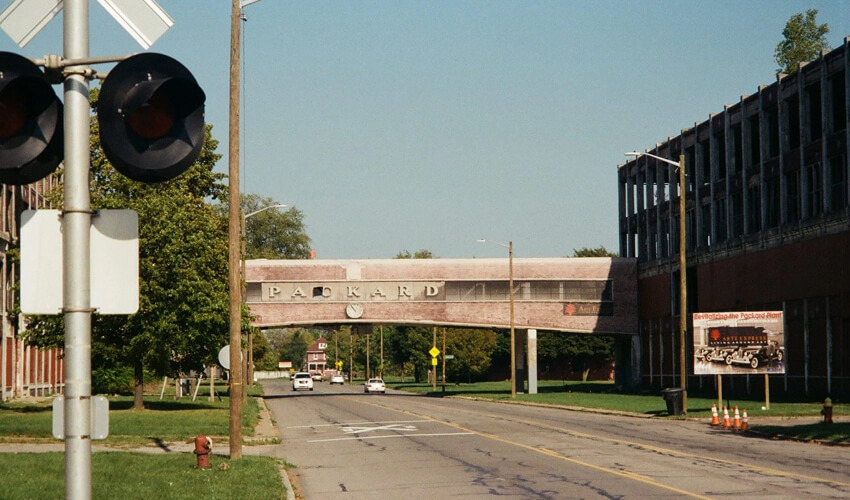
Detroit was once the cathedral of industrial modernity. The Packard Plant, 3.5 million square feet of steel, glass, and roaring precision, symbolised the American century. Then globalisation, automation, and political neglect hollowed it out.
- Factories fell silent.
- Neighbourhoods unravelled.
- The future felt foreclosed.
But it’s always in crises that new visions slip through the cracks.
Frequencies From Elsewhere
Late-night radio transmissions, Parliament-Funkadelic, Kraftwerk, Italo disco, and Prince became portals. Through hiss and static, Detroit kids heard alternate futures. Machines no longer sounded like oppressors; they sounded like possibilities.
Juan Atkins, Derrick May, and Kevin Saunderson, the Belleville Three, were among the first to seize this intuition. Atkins formed Cybotron, then released “No UFOs,” a track that felt like a transmission from a parallel dimension: minimalist rhythms, alien textures, a title that suggested contact with something beyond the known.
Techno as Industrial Samsara
Detroit techno adopted repetition not lazily, but spiritually. Atkins himself likened it to samsara, the cyclical Buddhist cosmology. Loops became mantras. Drum machines became meditation bells. Repetition wasn’t monotony; it was transcendence via machinery.Techno became Detroit’s philosophical martial art:
Take the machine that dismantled your city and reprogram it into a vehicle for liberation.
Afrofuturism on the Drum Grid
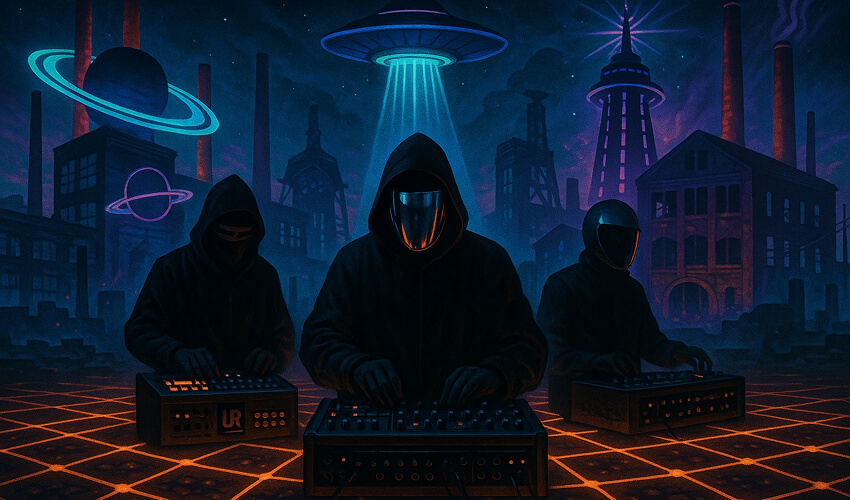
Detroit techno didn’t emerge from a vacuum. It extended a lineage of Black speculative creation: Sun Ra’s cosmic jazz, George Clinton’s Mothership, Octavia Butler’s futures, Samuel Delany’s galaxies. Afrofuturism used space, myth, and technology as metaphors for freedom.
Techno translated that cosmic tradition into a pure signal.
- Minimal lyrics.
- Maximal imagination.
- A refusal to accept reality’s limits.
Later, Underground Resistance sharpened this ethos into a militant manifesto: anonymity, black-labeled records, names like “Codebreaker.” Their slogan captured it perfectly:
“We are not entertainers. We are journalists broadcasting on the frequencies of techno.”
Motown had played the game to win inside the system. UR rejected the system altogether and built a new sonic world in the ruins.
From Belleville to the Vault — How Techno Reunified Berlin
When the Berlin Wall fell, the city entered a liminal state, half-abandoned, half-awakening. East Berlin was a vast maze of forsaken buildings and power stations. Ownership was murky. Rules evaporated.
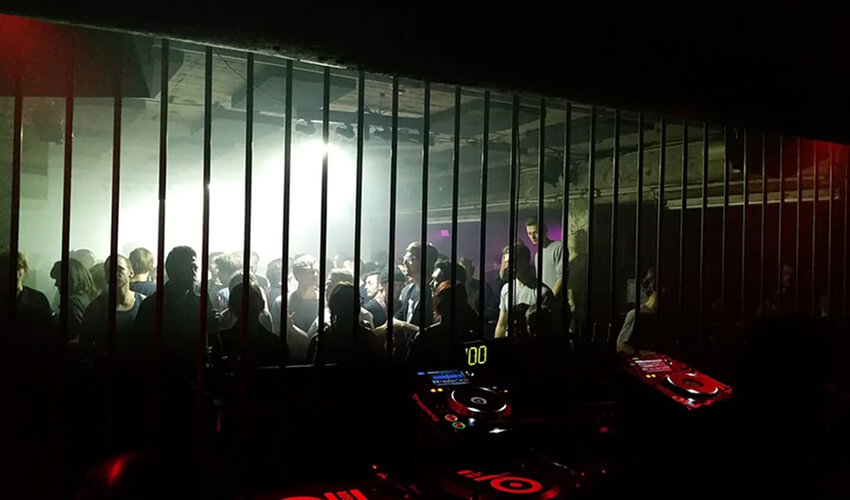
Into this vacuum came techno; Tresor opened in a literal bank vault: iron bars, concrete sweat, no cameras, no ego. Detroit’s machine-soul echoed beneath Berlin’s scarred streets.
The dancefloor became neutral territory, a spiritual demilitarised zone. Queer, straight, East, West, punks, artists all dissolved into one mass of breath and rhythm.
Techno became the ritual of reunification.
If Detroit used rhythm to survive collapse, Berlin used rhythm to heal division.
Repetition as Transcendence
Techno borrowed from the oldest human technologies of spiritual union: mantra, drumming circles, Sufi whirling, gospel call-and-response. A 4/4 kick became the industrial cousin of ancient wisdom traditions.
Berliners learned to dissolve ego in steel-toed meditation. By sunrise, individual identity felt porous and melted into collective presence.
The Gear That Accidentally Rewired Culture
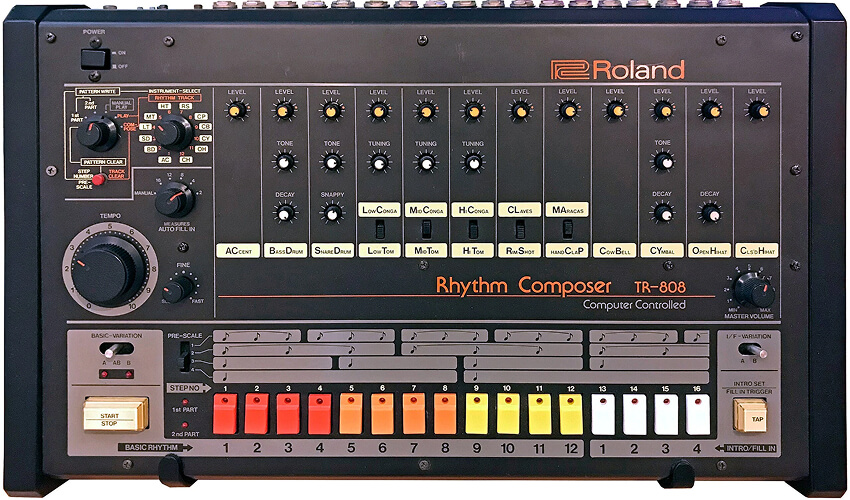
Techno’s creation myth has unlikely heroes: commercial failures.
Roland’s TR-808, TR-909, and TB-303 machines, mocked for sounding “too fake”, ended up shaping the next 40 years of global culture.
Why?
- Because the mainstream rejected them.
- Which meant they became cheap.
- Which meant young, broke kids could buy them.
Failure became accessibility. Accessibility became a revolution.
Bedroom producers replaced studios. Local DJs replaced cultural gatekeepers. A decentralisation began that mirrors the architecture of the internet.
Techno, in structure and philosophy, always favoured the many over the few.
The Rave as a Temporary Global Brain
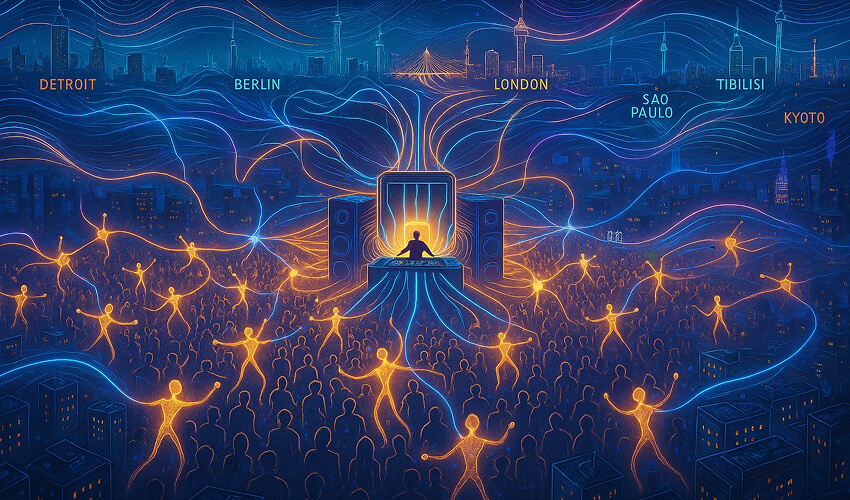
What is a rave if not a collective neural network?
From above, a festival looks like a living organism: individuals syncing to a central pulse, then syncing to each other. Neuroscience confirms what dancers have intuited for generations—synchrony produces bonding, trust, and even aligned heartbeats.
The rave is a temporary global brain, a self-organising system where:
- Each dancer is a neuron
- Each sound system is a fibre bundle
- The DJ is an executive function
- The club is the cortex
Ideas (musical motifs) propagate, mutate, and return across global scenes: Detroit → Berlin → London → São Paulo → Tbilisi → Kyoto → back to Detroit.
Techno behaves not like a genre but like a complex adaptive organism.
Enter the Neural DJ — Techno Meets AI
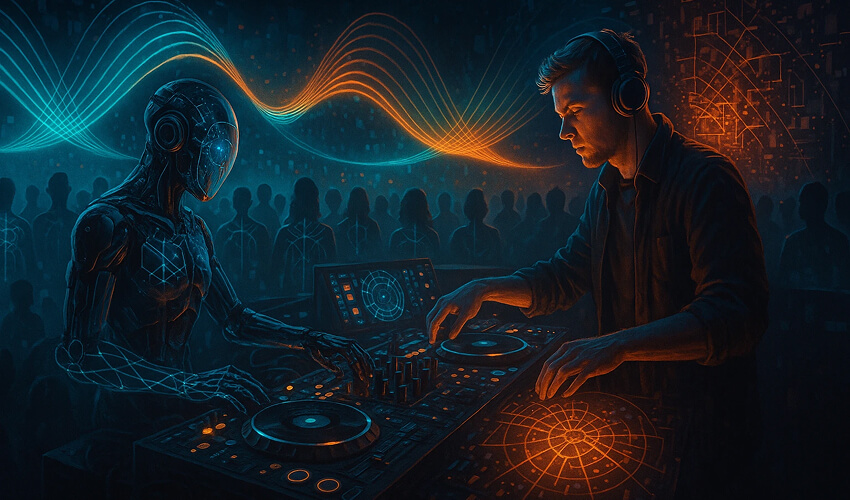
We stand now at the third origin point of techno: the algorithmic frontier.
AI already suggests tracks, syncs BPMs, reads crowd energy, and fine-tunes mixes. Soon, clubs may have sensors mapping movement and biometrics, feeding real-time data into machine-learning systems that modulate the music moment by moment.
This creates two futures:
Future 1: Algorithmic Sludge
Crowd-maximising algorithms optimise for the lowest common denominator:
hooks → drops → dopamine loops → forgettable nights.
It’s musical fast food. A rave engineered like TikTok.
Future 2: Synthesis
AI becomes a creative co-consciousness, a prosthetic intuition for human DJs:
- Surfacing forgotten B-sides
- Generating unexpected harmonic bridges
- Analysing crowd synchrony
- Freeing the DJ to risk more and feel deeper
The question isn’t whether machines will join the booth. It’s what values we encode.
Techno has always fought to keep the experience human, communal, and transcendent.
AI can amplify that mission—or erase it.
Techno as a Chapter in the Cosmic Library
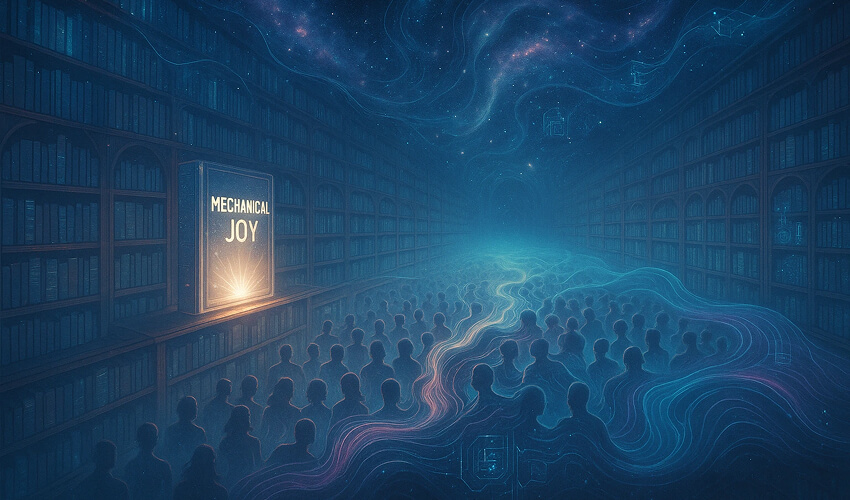
Einstein once described humanity as a child wandering a vast library of unknowable volumes.
Techno adds a new volume: The Book of Mechanical Joy.
Like Vedanta’s non-dualism, like Zen’s dissolution of ego, like Schrödinger’s cosmic oneness, techno offers a secular glimpse of unity:
A moment where the “I” becomes porous.
Where sound and self blur.
Where a crowd breathes as a single organism.
Detroit used this mechanism to imagine the future.
Berlin used it to heal.
The global techno diaspora uses it to connect.
And now we face the next chapter—whether AI becomes a force of flattening or a catalyst of wonder.
The choice is collective.
The dancefloor is democratic.
The future is participatory.
The Grand Events Moment
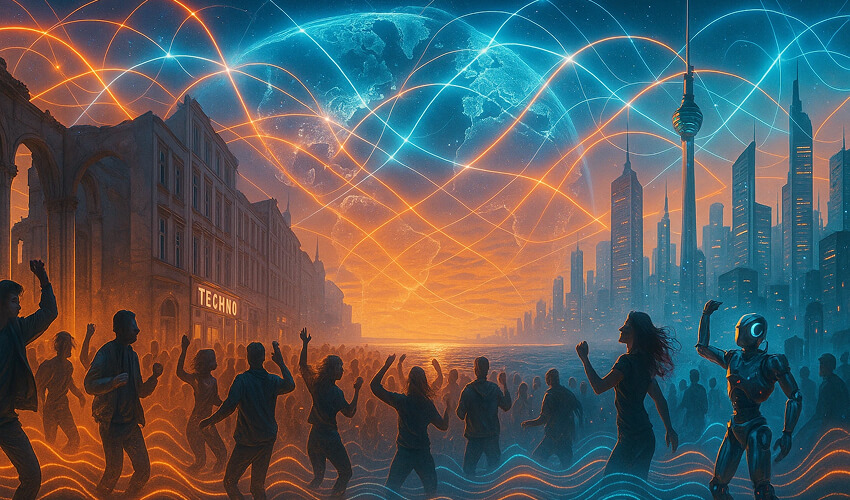
Techno has always asked a deceptively simple question:
What happens if we sync up?
Sync bodies to the beat.
Sync strangers into a community.
Sync human creativity with machine precision.
Sync cities across oceans.
Sync the past with the future.
In every era—Detroit’s ruins, Berlin’s reunification, our neural horizon—the answer has been the same:
Something beautiful emerges when humans dare to share a frequency.
A Lens for the Reader
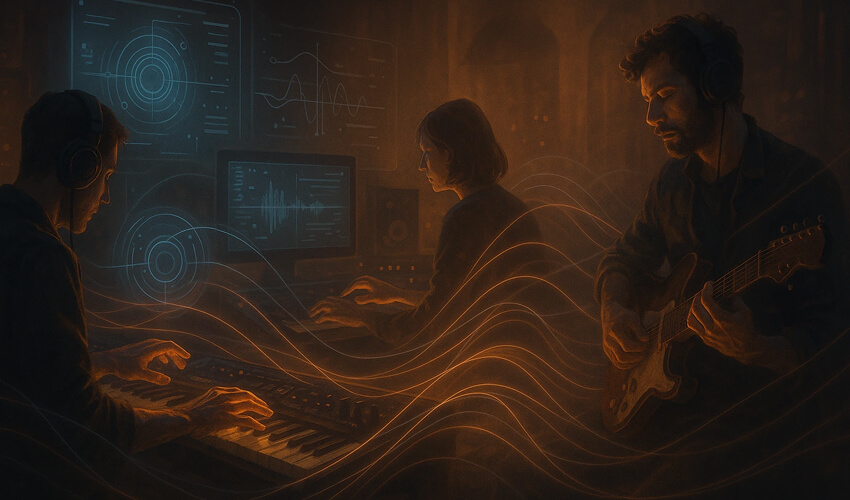
Techno isn’t about escape.
It’s about remembering that beneath the noise of daily life, we are already interconnected. The machines simply amplify what was always true.
And as AI enters the booth, our task is ancient:
Protect the soul.
Honour the roots.
Use the tools, but do not become them.
The future is not written.
But the beat is counting in.
Return to the Beat
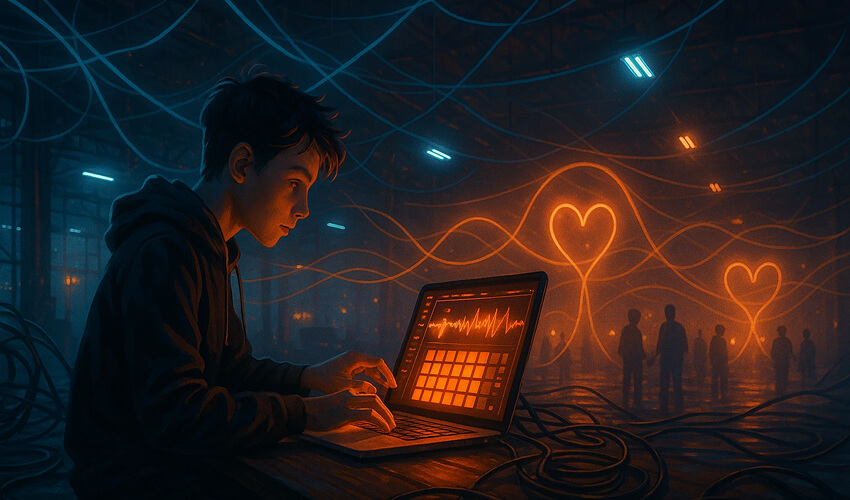
Somewhere tonight, a teenager is hunched over a laptop, twisting knobs on a virtual drum machine.
Somewhere else, a warehouse is warming up, lights humming, cables coiling like neurons.
Listen closely:
Boom. Boom. Boom. Boom.
A thousand hearts, syncing.
A new frequency, forming.
A new chapter, beginning.
The experiment continues.
And the next movement is ours to write.
References
- 10 moments that defined Tresor | DJ Mag
- The Golden Years — Detroit Techno’s Warehouse Scene
- How Black Detroit artists and Afrofuturism shaped techno – Axios Detroit
- Roland TR-808 – Wikipedia
- Hearts that drum together beat together – Neuroscience News
- Physiological and Behavioral Synchrony Predict Group Cohesion and Performance | Scientific Reports
- AI for DJs: How Artificial Intelligence Is Revolutionizing Mixing – GearclubDirect
- A Child in the Library of the Universe