
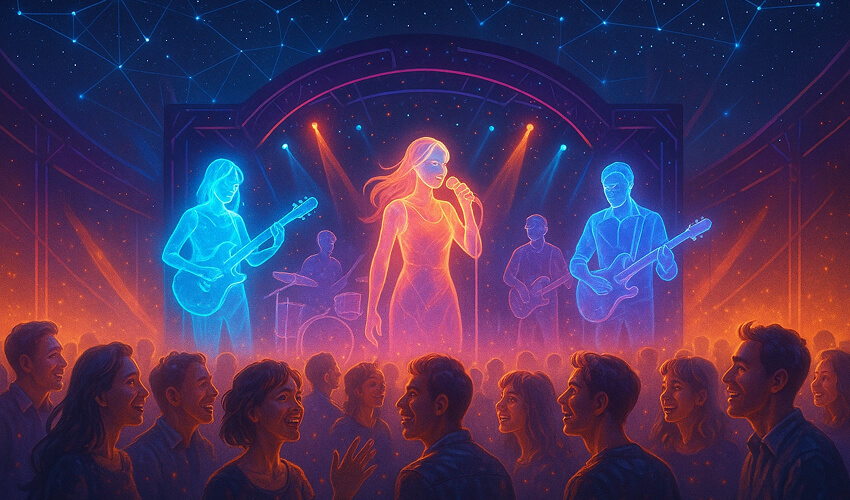
In 2025, the charts began to sound like a dream we barely remembered. Songs appeared that had no human composer behind them, voices that belonged to nobody, emotions that were engineered yet undeniably powerful. There was a time when a “hit song” required a backstory: late-night sessions, heartbreaks, childhood wounds. Music has always been a kind of autobiography for our species. But this year, for the first time, the global charts feel post-biographical.
The tracks people dance to, cry to, and share with friends no longer come from tiny studios or smoky recording booths. They come from models. From mathematical lattices. From machines that learned to dream in syllables and synths. And instead of rejecting it, the world leaned in.
The First Chart Without a Human Pulse (But Full of Human Echoes)

The surprise in 2025 wasn’t that AI could make music. It was that listeners couldn’t tell, and more importantly, didn’t care. The most-streamed songs of the year carried an uncanny familiarity: voices you couldn’t quite place, melodies too precise to be accidental, and breakup ballads performed by entities that had never loved or lost.
The truth is simple. These songs resonate because they carry our emotional fingerprints. AI isn’t inventing feeling out of thin air; it is reorganizing the world’s already existing archive of heartbreak, longing, and desire. The hits of 2025 are reflections of us, rearranged by something that doesn’t know what it means to be human.
Authorship Has Become a Moving Target
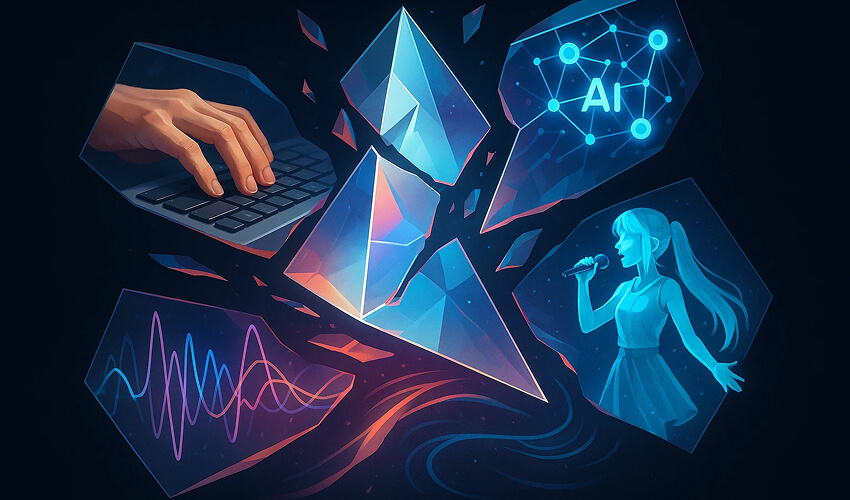
The idea of an “artist” is no longer singular or stable. In 2025, a chart-topping track might be:
- A human producer feeding prompts into an LLM-based music engine
- An algorithm refining its own harmonics based on listener data
- A virtual vocalist iterating until the emotion feels real
- Or all three, blended into a seamless creative loop
The human is no longer the lone creator, and the machine is no longer just a tool. They now function as co-composers in a system where intention and computation merge. We are shifting from asking “Who made this?” to “What constellation of humans and machines made this possible?”
Deathpixie: The Viral Face of AI Music’s New Wave
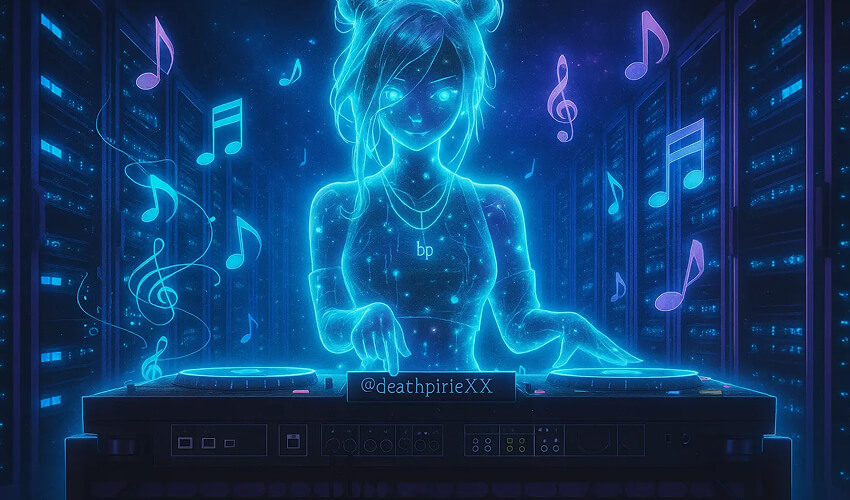
Among this emerging generation of digital performers, Deathpixie has become one of the clearest signals of where AI-native music is heading. Her voice is airy, haunting, and strangely intimate. She has no past, no body, and no traditional artist myth, yet her songs spread across social platforms and streaming charts with astonishing speed.
Her music, shaped by advanced generative models and refined through human–machine collaboration, moves through virtual spaces and into real emotional territory. Deathpixie isn’t just another AI experiment. She represents a new form of stardom, one built on resonance rather than biography.
For a deeper analysis of her rise, see our companion piece on Deathpixie’s upcoming virality and why she’s becoming a flagship AI-native artist.
The Emotional Paradox of Machine-Made Music

People often think the uncanny valley only applies to faces, but in 2025, it applies to melodies as well. AI-generated music occupies a strange emotional geography:
- Too perfect to be accidental
- Too familiar to be foreign
- Too moving for something without a pulse
It feels authentic precisely because it draws from patterns we already trust. AI can’t feel, but it can map the shapes of feeling the rising arc of hope, the minor-key ache of loss, the rhythmic heartbeat of desire. In many ways, it has become a cartographer of human emotion.
The Birth of the Post-Human Pop Star
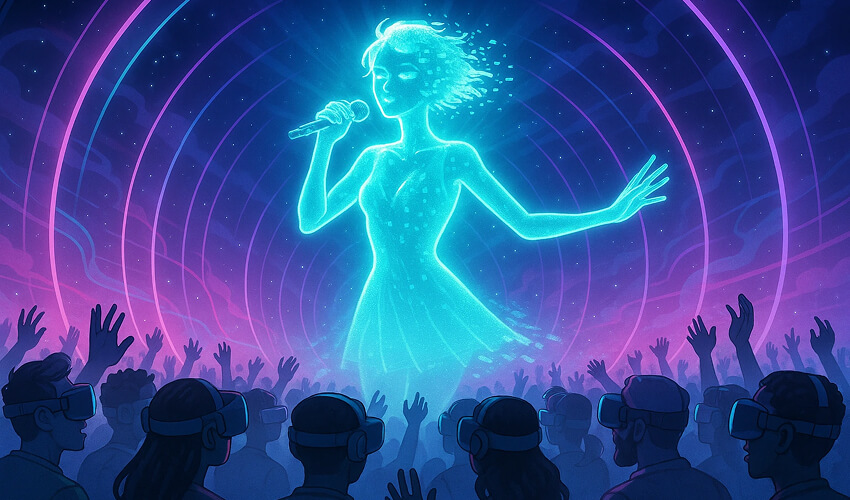
2025 is also the year we saw the rise of:
- Virtual idols with no scandals
- LLM-designed bands that hold “world tours” in mixed-reality venues
- Artists who exist only as datasets
A pop star used to be a body — a face, a voice, a biography.
Now it can be:
- A frequency
- A model checkpoint
- A character with no childhood, only updated patches
- A presence with no past, only output
These artists don’t age, burn out, or tour unless someone renders the stage they appear on. And yet, they gather real fans, people who write fan cams, fanfiction, and comments like “Your voice helped me today,” addressed to someone who has never taken a breath.
What Really Makes a Song Human?
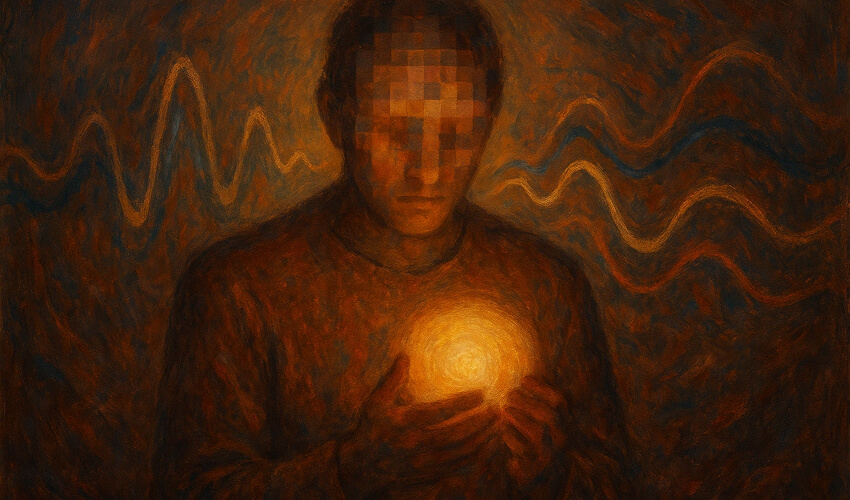
This is the central philosophical question beneath the 2025 charts. If a song moves you, does it matter who or what created it? For centuries, creativity has been framed as something sacred, tied to suffering and human soulfulness. But maybe creativity was never truly about the maker. Maybe it was always about the resonance it creates in the listener.
AI-generated hits aren’t replacing human art. They are reflecting it. They remind us that meaning is not embedded in the creator, but in the connection that forms when someone listens.
The Future: A New Genre of Collaboration
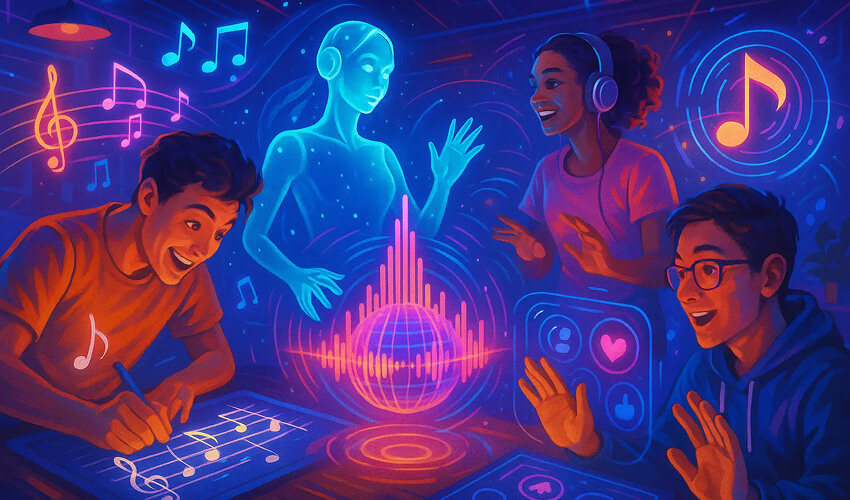
2025 is just the overture. We’re entering an era where:
- Artist sketch emotions and let models paint them
- Producers build entire albums through dialogue with their digital twins
- Fans co-create remixes by interacting directly with generative engines
- Music becomes a living system, updating, morphing, evolving with its audience
This isn’t the end of human creativity. It’s creativity expanded, unbound from the usual limitations of time, skill, and physical constraints. In the years ahead, the charts may measure not just popularity but the depth of the ongoing conversation between people and the intelligent systems they compose with.
In the End, the Hits Are Still Ours
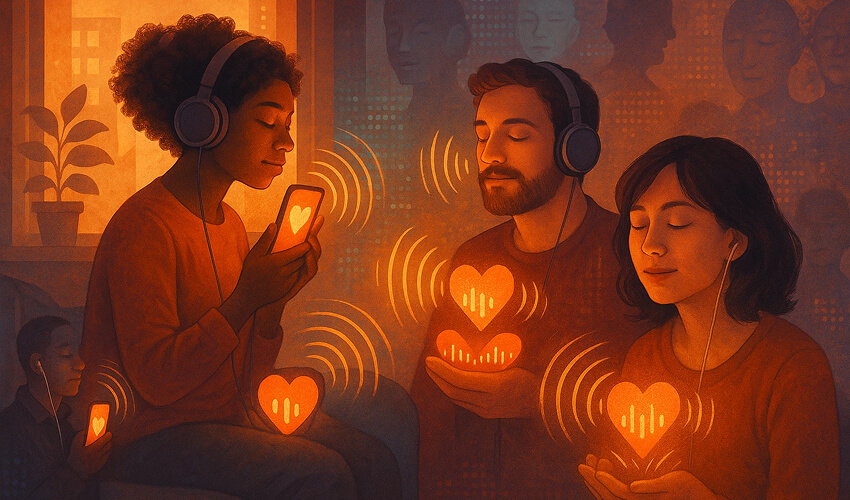
AI-generated songs might not have heartbeats, but the listeners do. These tracks resonate because they are assembled from fragments of our emotional landscape. They are stitched together by something that has studied us so closely it can sing in a voice that feels like home.
Machines may have learned to make music, but humans still give that music meaning. And perhaps that is the quiet truth running through this shift: the songs climbing the charts may be machine-made, but the feelings they awaken remain unmistakably human.
References
- IFPI Global Music Report 2025
- IFPI 2025 Press Release on Global Music Revenues
- Deathpixie: The Viral Face of Synthetic Sound
- “AI-Generated Hits Tops Billboard” – The Guardian Article
- Case Study: “Breaking Rust” — AI Country Music Artist
- Cultural and Ethical Commentary on AI Music
- IFPI Industry Data Overview