
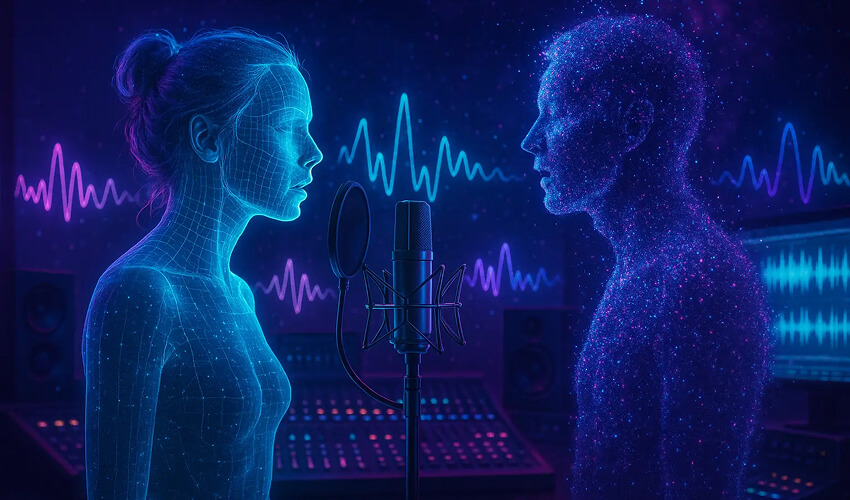
Picture a quiet suburban kitchen in the early morning. A mother makes coffee while her son scrolls through his phone before school. He taps on a trending TikTok video, and a voice fills the room. It sounds exactly like Frank Ocean’s warm, intimate, unmistakable, but the song is one he never released. In fact, he never recorded it at all.
The mother looks up, puzzled. “Is that him?” Her son hesitates. “It sounds like him. But people in the comments say it’s AI.”
They listen for another moment, unsure whether they should feel impressed or uneasy. The track is beautiful, yet something about it feels slightly unreal, like hearing a familiar memory retold by someone who wasn’t there.
Within hours, the clip spreads across their feeds. Friends share it in group chats, each reacting differently: some amazed, some disturbed, some wondering if this crosses an invisible line. What started as a casual morning scroll becomes a glimpse into a larger cultural shift.
AI-generated music covers are no longer niche experiments hiding in tech forums. They’ve moved into everyday life into kitchens, classrooms, commutes, and club playlists, raising new questions about creativity, identity, authorship, and what it means for a voice to truly belong to someone.
This is the crossroads where technology and culture now stand, and the implications reach far beyond a single clip or a single voice.
When Machines Sing: The Rise of AI Music Covers
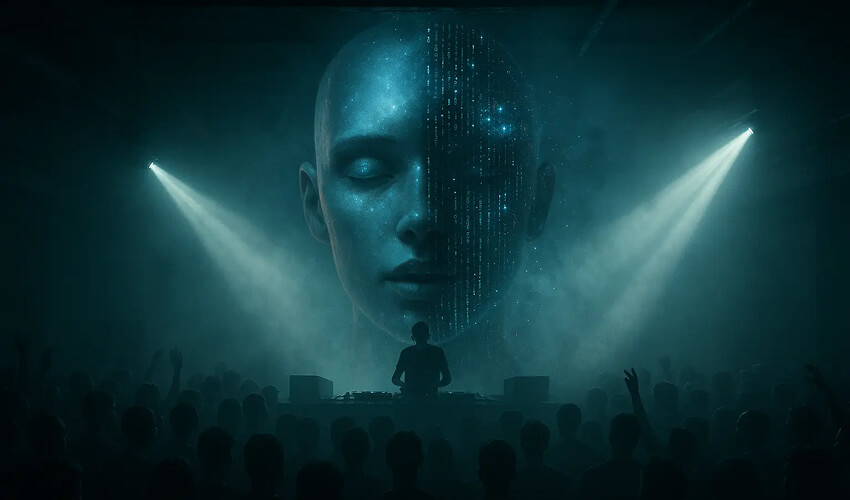
AI music covers didn’t begin on big stages; they started on laptops, where hobbyists and producers experimented with voice models out of curiosity. Early attempts were rough imitations. Then the models became startlingly accurate, capturing breaths, timbre, and emotional nuance.
Once these experiments hit TikTok and YouTube, the trend exploded. Suddenly, listeners were hearing Ariana Grande reinterpret old rock songs or Frank Ocean “covering” tracks he never touched. What began as playful remix culture quickly evolved into a new creative frontier.
AI wasn’t just copying voices anymore. It was recomposing them, blending styles, and generating performances that felt both familiar and impossible. The result was a cultural tremor, part excitement, part unease as the music world realized something fundamental had changed.
Legal Labyrinths: Navigating Copyright in AI-Generated Music
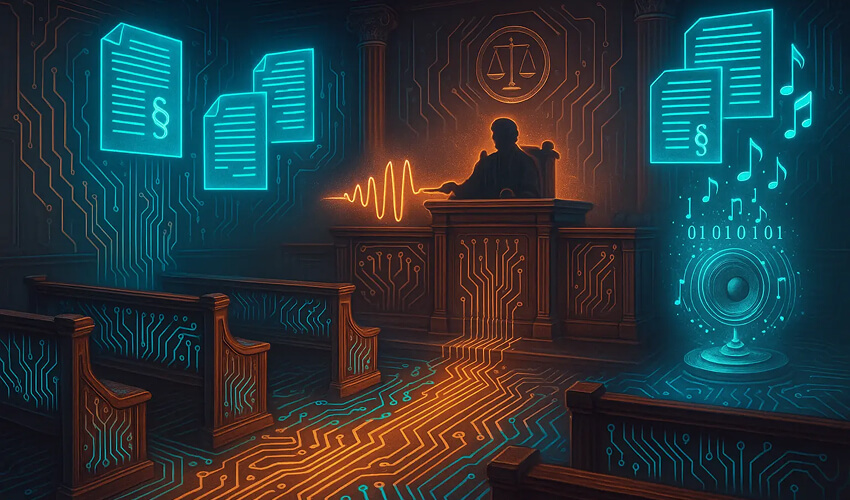
Copyright law, that venerable guardian of creativity’s boundaries, is facing an unprecedented puzzle. Traditional IP law assumes a human author, a person whose mind and hands shape a work. But what happens when the author is an algorithm?
Across courts worldwide, questions multiply:
- Who owns an AI cover? The developer? The user? The original artist whose voice was replicated?
- Can AI-generated works be copyrighted at all?
- How do “fair use” and licensing apply when a machine learns from existing songs?
Cases are emerging, some quietly, some explosively. The Zayn AI cover controversy, where an AI-generated track mimicked the artist’s voice without consent, raised alarms. Labels and artists cry foul, invoking moral rights and economic harms. Meanwhile, startups tout AI as a democratizing force, freeing creativity from gatekeepers.
The law lags behind the techno-velocity of AI, a reminder of Schrödinger’s paradox: the legal system is both protecting and challenged by AI, trapped in superposition until the next ruling collapses the uncertainty.
Ethical Dissonance: Art, Authenticity, and AI
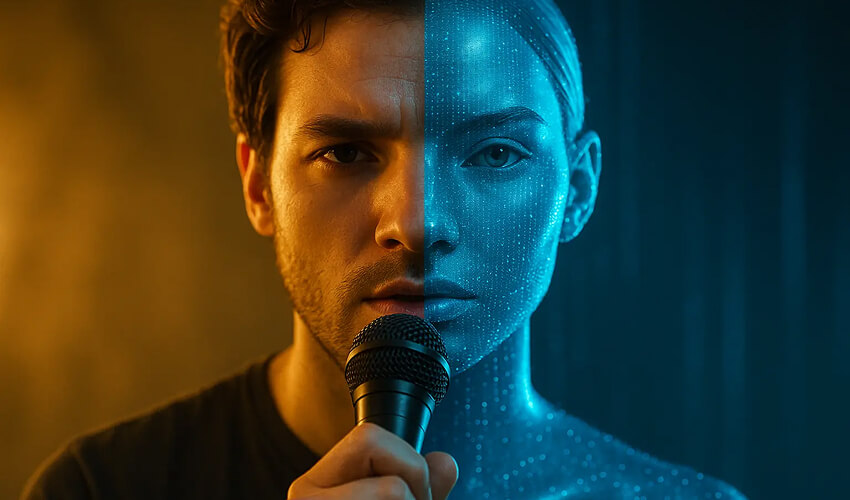
At the heart of the debate pulses an ethical question: What is authenticity? If an AI sings your song perfectly, who is the artist? Is it homage or theft? Innovation or exploitation?
Eastern mystics might see this as a play of maya, the illusion of form, a dance between the real and the reflected. Yet Western sensibilities prize originality, individual genius, and the emotional labor behind art.
Artists feel violated, their unique vocal signatures commodified without consent, their creative labor distilled into data points. But some argue AI covers extend the boundaries of art itself, creating a new genre where human and machine merge.
Can we embrace AI as a collaborator, a new muse in the digital age, or must we draw a hard line to protect the sanctity of human creativity?
Viral Culture: Memes, Fans, and the Internet Frenzy
Enter the social media arena, where AI covers become lightning rods of cultural frenzy. Clips of AI versions of Billie Eilish or Tupac generate millions of views, shared with awe, irony, and outrage. Memes bloom, some celebrating the novelty, others mocking the “deepfake voices.”
This viral ecosystem thrives on tension and ambiguity. Fans debate fiercely: Is this art or an uncanny valley abomination? Can AI capture the soul behind the sound? Comment sections erupt into philosophical brawls, mixing legal jargon with pop culture slang.
The internet’s collective consciousness wrestles with the new reality, a kaleidoscope where meaning, identity, and ownership twist and recombine with dizzying speed.
Emotional Fallout: Artists, Fans, and the Uncanny Valley
Behind the memes and court filings lie real human emotions. For many artists, hearing their voice sung by a machine triggers uncanny discomfort, grief for lost control, even fear of obsolescence.
Fans experience something similar — a strange mixture of fascination and unease. The AI voice is close enough to trigger recognition but distant enough to unsettle, like hearing a familiar melody through a fogged mirror.
Psychologically, this taps into deep fears of replication, loss of uniqueness, and the blurring of self and other. AI forces a confrontation with what it means to be human in an era where machines echo our very essence.
AI as Creative Force or Cultural Threat?
Philosophically, AI covers are a Grand Event, a shift that forces humanity to reconsider creativity itself. Is originality a human monopoly, or a pattern that can be recombined infinitely? Is AI a new collaborator expanding artistic horizons, or a disruptive force commodifying culture into zeros and ones?
Alan Watts might say it’s the cosmic dance of form and emptiness, technology mirroring the self-reflective nature of consciousness. Einstein might marvel at the uncanny symmetry between human creativity and algorithmic complexity.
Whatever the answer, AI marks a turning point where law, ethics, emotion, and culture converge on the question: Who or what sings the song of the future?
Toward a New Harmony: What AI Covers Means for Music’s Future
The legal storms will rage, and ethical debates will deepen, but AI covers are here to stay. They beckon us toward a new harmony where human and machine co-create, where law adapts, and culture evolves.
Perhaps the future of music isn’t a battle of real versus synthetic, but a symphony where both voices resonate, challenging us to expand our understanding of creativity, authorship, and authenticity in the digital age.
Where the Human Voice Meets the Infinite
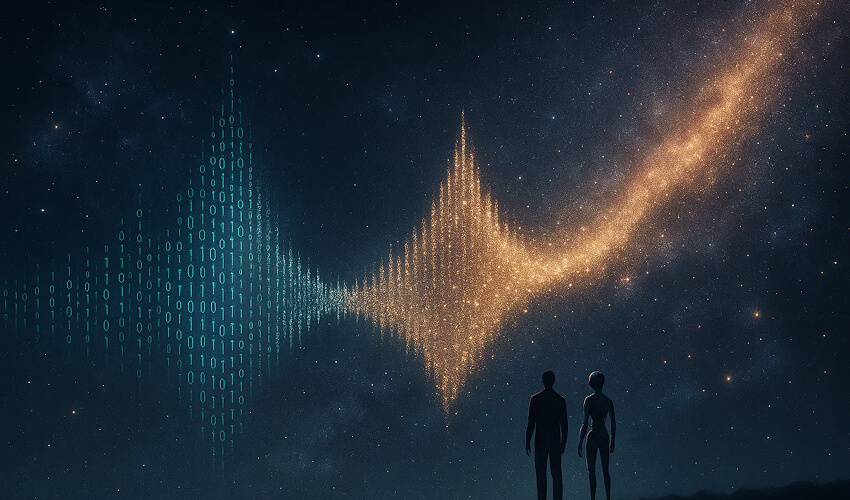
As the synthetic voice fades into silence, the crowd rises not in confusion, but in unison. Their voices intertwine with the digital echoes, weaving a tapestry of sound where human soul and machine pulse as one.
In that shared moment, the boundary dissolves. Past and future, flesh and code, tradition and innovation all converge into a singular rhythm. The music no longer belongs solely to one or the other; it becomes a living narrative of connection, transformation, and possibility.
This is the new dance floor of creativity, a place where the song of the future is sung not by a lone voice, but by a chorus of intertwined minds, human and artificial. It is a reminder that, in the grand cosmic symphony, authenticity is less about origin and more about resonance, a vibration that transcends the source, echoing through the library of the universe.
And so, as the lights dim and the last note lingers in the air, we find ourselves not at an ending, but a beginning, the opening of a new chapter where wonder, curiosity, and creation flow freely between the circuits of machines and the beating hearts of humanity.
References
- AI covers: legal notes on audio mining and voice cloning — Journal of Intellectual Property Law & Practice (2024)
- The Rise of AI in Music: Legal Challenges and Copyright Concerns — Cardozo AELJ (2024)
- Case of Heart on My Sleeve (2023), the viral AI-generated song — as discussed in media and legal commentary
- The recent 2025 agreement between Warner Music Group (WMG) and Suno, establishing licensed AI-music models after a copyright settlement
- Example of the 2025 viral song I Run by Haven, which used AI-generated vocals and was later removed from streaming due to AI-cloning controversy.